.jpeg)

Incorporating is the easy part; the hard part is knowing which formation and governance documents actually matter in the first 90 days and which can wait without scaring off investors or tripping compliance landmines. This guide breaks down bylaws, operating agreements, and shareholders’ agreements in practical, early‑stage terms and ends with a lean post‑incorporation checklist you can use as a data room starter pack. Along the way, there are prompts to speed everything up using DocLegal.ai, your AI legal document generator and reviewer, so you are “due‑diligence ready” much earlier than your peers.
Bylaws, operating agreements, shareholders’ agreements
For early‑stage founders, the simplest model is:
- Corporations: bylaws (for internal governance) and, separately, a Shareholders' Agreement (for owner-to-owner relationships).
- LLCs: operating agreement, which serves as the single, comprehensive document covering both internal governance and the relationships among members.
Bylaws (for corporations)
- Internal “constitution” that covers board structure, officer roles, meeting mechanics, and voting rules.
- Typically required or strongly expected at formation and often requested by banks, investors, and regulators as part of the corporate records.
Use DocLegal.ai to generate jurisdiction‑specific agreements aligned with your needs, or have it run an automated review for your scenario.
Find out more about How to Use DocLegal.AI's Document Review Feature?
Operating agreement (for LLCs)
- Contract among LLC members that sets ownership percentages, profit‑sharing, decision‑making, and exit and buy‑out mechanics.
- Not always mandatory, but strongly recommended; it is often the key governance doc for multi‑member LLCs and a main item in due diligence.
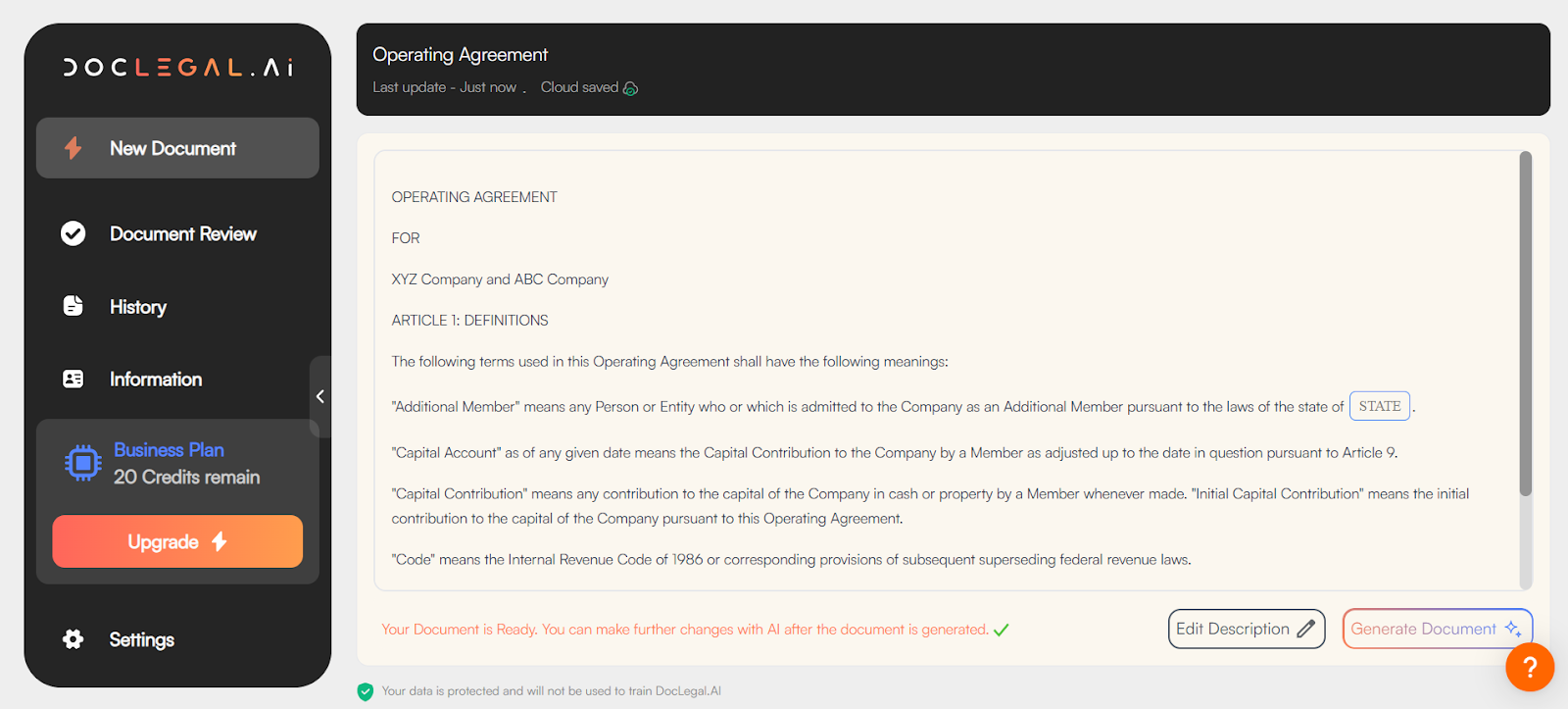
Use DocLegal.ai to draft a operating agreement that clearly ties economics (who gets what) to control (who decides what), then sanity‑check every revision in minutes instead of days.
Shareholders’ agreement (for closely held corporations)
- Critical contract among the owners of a closely-held corporation. It is essential for defining what happens during critical, often contentious, events like a founder's departure, a share transfer, or a deadlock in decision-making..
- Sits on top of bylaws: bylaws handle “how the company runs day‑to‑day”; the shareholders’ agreement handles “what happens between the owners when things get messy or strategic (funding, exits, deadlock)”.
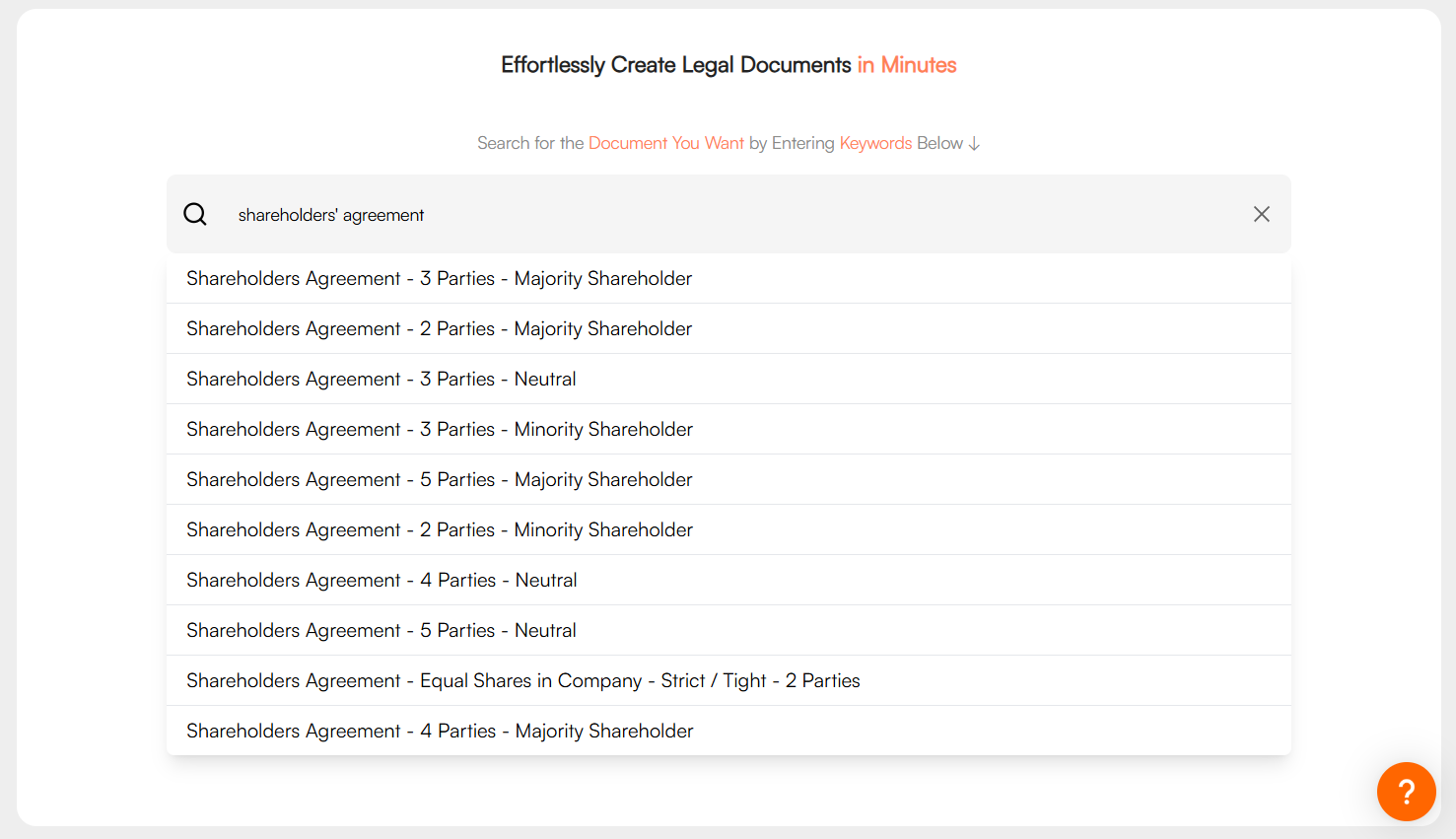
DocLegal.ai can propose a shareholders’ agreement tailored to founder‑friendly outcomes (vesting, good/bad leaver treatment, basic drag/tag), then highlight any conflicts between that agreement and your existing bylaws.
First 90 days of business launch: what is truly essential?
Think of the first 90 days as the “minimum viable governance + compliance” window: get the essentials in place, avoid fines, and be ready to onboard your first investors and key hires. Everything else is nice‑to‑have but can be sequenced to later milestones.
High‑priority formation and governance documents (Day 0–90)
These usually should not wait:
- Charter / Certificate of Incorporation or Articles of Organization (already filed to incorporate or form the LLC).
- Bylaws (corporation) or Operating Agreement (LLC) should be adopted as one of the very first actions by the board or members, contemporaneously with the filing of the formation documents. Delaying this creates a governance gap and is a red flag for investors..
- Initial board and shareholder actions: first board consent or minutes appointing officers, approving equity plan, authorizing bank account, confirming registered agent.
- Equity‑related docs: founder stock purchase/issuance docs, vesting schedules, option plan approval, 83(b) filing support where applicable.
All of these belong in your post‑incorporation checklist and in a simple “data room starter pack” folder structure that investors will recognize immediately. Use DocLegal.ai to:
- Generate initial resolutions, consents, and officer appointment docs from prompts describing your board and share structure.
- Review bank board resolutions, equity plan approvals, and founder share purchase agreements for missing clauses or inconsistent dates.
Important but can often wait (Day 90 onwards or tied to milestones)
- Shareholders’ agreement: often triggered by a priced round, adding external investors, or co‑founder departures.
- Advanced governance policies: board committee charters, information rights policies, more formal conflict‑of‑interest and related‑party transaction procedures.
- Expanded IP assignment and invention policies for broader teams once you go beyond a handful of founders and early employees.
Registered agent, foreign qualification, multi‑state compliance
Once your startup starts hiring remotely or selling across borders, state‑level compliance quickly becomes a real risk area. The core concepts are:
- Registered agent: a person or service with a physical address in a state who receives legal notices and official mail on behalf of your company.
- Foreign qualification: registering your existing company to do business in another state, which typically requires a Certificate of Authority and naming a registered agent there.
- Multi‑state compliance: staying current on each state’s annual reports, franchise taxes, and any industry‑specific filings, usually managed through your registered agent or a compliance platform.
From a documents perspective, every foreign qualification adds to your corporate records and should go into the same governance docs/data room structure: formation docs, foreign qualification filings, proof of good standing, and agent appointments.
Building a data room starter pack and being due‑diligence ready
Investors increasingly expect even pre‑seed companies to be “due‑diligence ready” with a clean, navigable folder of corporate records. A practical data room starter pack for your first 90 days and beyond might include:
- Formation documents: certificate/articles, bylaws or operating agreement, any amendments.
- Governance docs: initial and subsequent board and shareholder consents, registers of directors and shareholders/members, foreign qualification and registered agent records.
- Equity and founder docs: cap table, stock or unit issuance docs, vesting terms, option plan and grants, 83(b) support materials if applicable.
- Key contracts and policies: IP assignment agreements, key customer or vendor contracts, and any shareholders’ agreement once adopted.
DocLegal.ai can walk you through generating and reviewing every essential formation and governance document over your first 90 days.
Read more about Founders’ Guide with AI Templates.



.jpg)
.jpg)