
What is Intellectual Property and How to Protect it?
Intellectual property (IP) refers to creations of the human mind: intangible assets that have value because they result from creativity, innovation, or ingenuity. It includes inventions, literary and artistic works, designs, symbols, names, and images used in commerce. The core idea is that these creations deserve legal protection, similar to how physical property (like land or a car) is protected from theft or unauthorized use.
Similar to any other property, IP can be bought, sold or licensed, both domestically and internationally. Owners can sue for infringement (copying, selling fakes, etc.) and seek damages, injunctions, or seizure of counterfeit goods.
However, IP rights are not absolute: there are several limitations of such rights. For example, fair use exceptions allow limited copying for purposes like education and criticism, and after the protection period ends, the work enters the public domain where anyone can use it freely.
In this article, we will discuss what is IP, what constitutes IP infringement and how to avoid it. Click here to see how this is important for your business success.
What are some examples of IP?
There are several primary categories of IP. The exact rules may vary slightly by country, but these categories are: copyrights, patents, trademarks, and trade secrets.
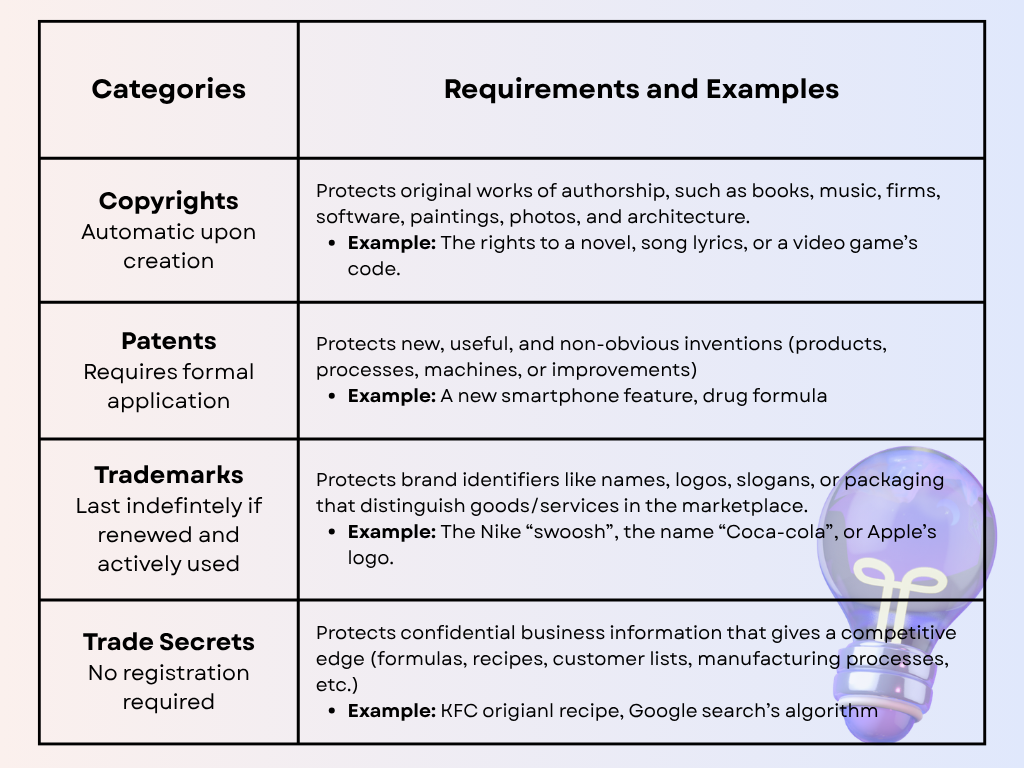
In addition, different types of IP have different durations. For example, the duration of copyrights is usually the creator’s life plus 70 years, the duration of a patent is typically 20 years from the filing date, and the protection of trade secrets lasts as long as the information remains secret.
Can I use someone’s IP?
Generally, no. You cannot use someone else’s IP without their permission. That will be IP infringement, and it may lead to lawsuits.
However, there are some situations where you can legally use it without permission.
Using copyrighted material
The primary way to use copyrighted material without permission is fair use under Section 107 of the Copyright Act. It will not be infringement if your use qualifies:
- Purpose and character of the use (including commercial vs. nonprofit/educational) — Favors transformative uses that add new meaning, expression, or message (e.g., criticism, parody, commentary). Nonprofit/educational uses are more likely to qualify than purely commercial ones. Recent cases (as of 2025–2026) have held that using lawfully acquired copyrighted works to train AI models can qualify as highly transformative fair use when the output does not substitute for the original.
- Nature of the copyrighted work — Creative/fictional works (e.g., novels, songs) get stronger protection than factual ones (e.g., news articles).
- Amount and substantiality of the portion used — Less is better; using the "heart" of the work hurts your case. However, even the entire work can sometimes be fair if necessary for the purpose.
- Effect on the potential market — Does your use harm (or potentially harm) the owner's sales or licensing market? This weighs heavily against fair use if it acts as a substitute.
Using trademarks
You may use another’s trademark without permission under these judge-made and statutory defenses if it does not cause consumer confusion about source or sponsorship:
- Nominative fair use: Using the mark only to refer to the owner's actual goods/services (e.g., "We repair iPhones" or comparative advertising).
- Requirements: (1) The product/service isn't easily identifiable without the mark; (2) You use only as much as reasonably necessary; (3) Nothing suggests sponsorship/endorsement by the owner.
- Descriptive (classic) fair use: Using the mark in its descriptive sense (not as a brand identifier) and in good faith (e.g., describing your own product as "apple-flavored" even if someone owns "Apple" for computers).
- Parody as fair use: Humorous or satirical commentary that pokes fun at the brand, as long as it doesn't confuse consumers or dilute the mark.
Using patents and trade secrets
Patents has extremely narrow experimental use exception, and it rarely applies. It covers uses done solely for amusement, curiosity, or philosophical inquiry—not for commercial purposes, testing for market readiness, or refining an invention to sell it.
Trade secret protection ends if the information becomes public or is discovered lawfully.
Important to note
- These exceptions are defenses only—you bear the risk and cost of litigation.
- They do not apply if you had a contract (e.g., NDA, license terms) prohibiting the use.
- Commercial or large-scale use is far less likely to qualify.
- AI-generated content based on IP can still trigger claims if not transformative.
How do I know it is someone’s IP?
To determine if something is someone else’s IP, you need to perform a “clearance search”. There is no single universal database that covers every possible right worldwide (IP is territorial), but you can check the major public records and look for quick visual or practical indicators. This is relatively easy, and you do not need a lawyer.
Quick practical indicators
- Looking for legal symbols or notice on the item itself:
- © (copyright notice) + year + owner name.
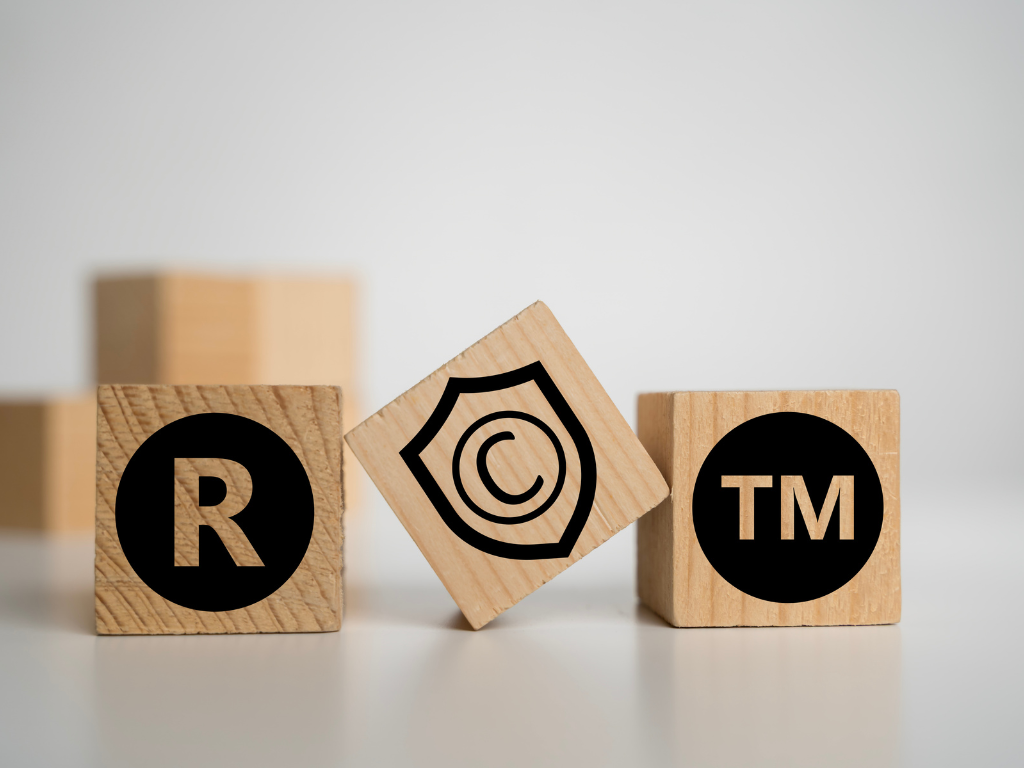
- ® (registered trademark) or ™ (common-law trademark claim).
- "Patent No." or "Pat. Pending" + number (on products, packaging, or labels).
- Watermarks, credits, or "All Rights Reserved" on images/text.
- Check the source: Visit the website/app where you found it and read the Terms of Use, Copyright Policy, or License (e.g., Creative Commons).
- Assume modern creative works are protected: In the U.S., almost everything created after 1928 (books, articles, photos, music, code, videos) is automatically copyrighted by the creator or their employer—no registration required. Protection lasts for the author's life + 70 years (or 95–120 years for corporate works). Only works explicitly in the public domain or under a free license are safe to copy freely.
Type-specific search steps (for US)
1. For copyrights (books, articles, images, music, videos, software, etc.)
- Go to the U.S. Copyright Office Public Records Portal
- Search by title, author, claimant/owner, or registration number (covers 1978–present; older records are also available).
- For images specifically: Use reverse image search tools:
- In Google Images or TinEye, upload the image or paste its URL to find the original source and owner.
- Check EXIF metadata (right-click image → Properties on Windows, or use online tools like Jeffrey's Image Metadata Viewer).
- Limitation: Not all works are registered, so absence of a record doesn't mean it's free to use.
- For a more comprehensive introduction and guide of copyrights clearance search, please refer here.
2. For patents (inventions, processes, machines, designs)
- Use the USPTO Patent Public Search
- Search by keyword, patent number, inventor, or assignee (owner).
- To check current ownership: Go to Patent Assignment Search, this shows if the patent was sold, licensed, or transferred.
- Quick tip: Google Patents is a user-friendly alternative that includes international patents too.
- For a more comprehensive introduction and guide of patent clearance search, please refer here.
3. For trademarks (brand names, logos, slogans, packaging)
- Search the USPTO Trademark Search system
- Use Basic Word Mark Search or Advanced options; it shows live registrations, pending applications, and owner details.
- For logos/designs: Use the image-search capabilities or filter by design codes.
- Trade secrets are not publicly searchable; if you encounter something confidential, you should already know it’s protected.
- For a more comprehensive introduction and guide of trademarks clearance search, please refer here.
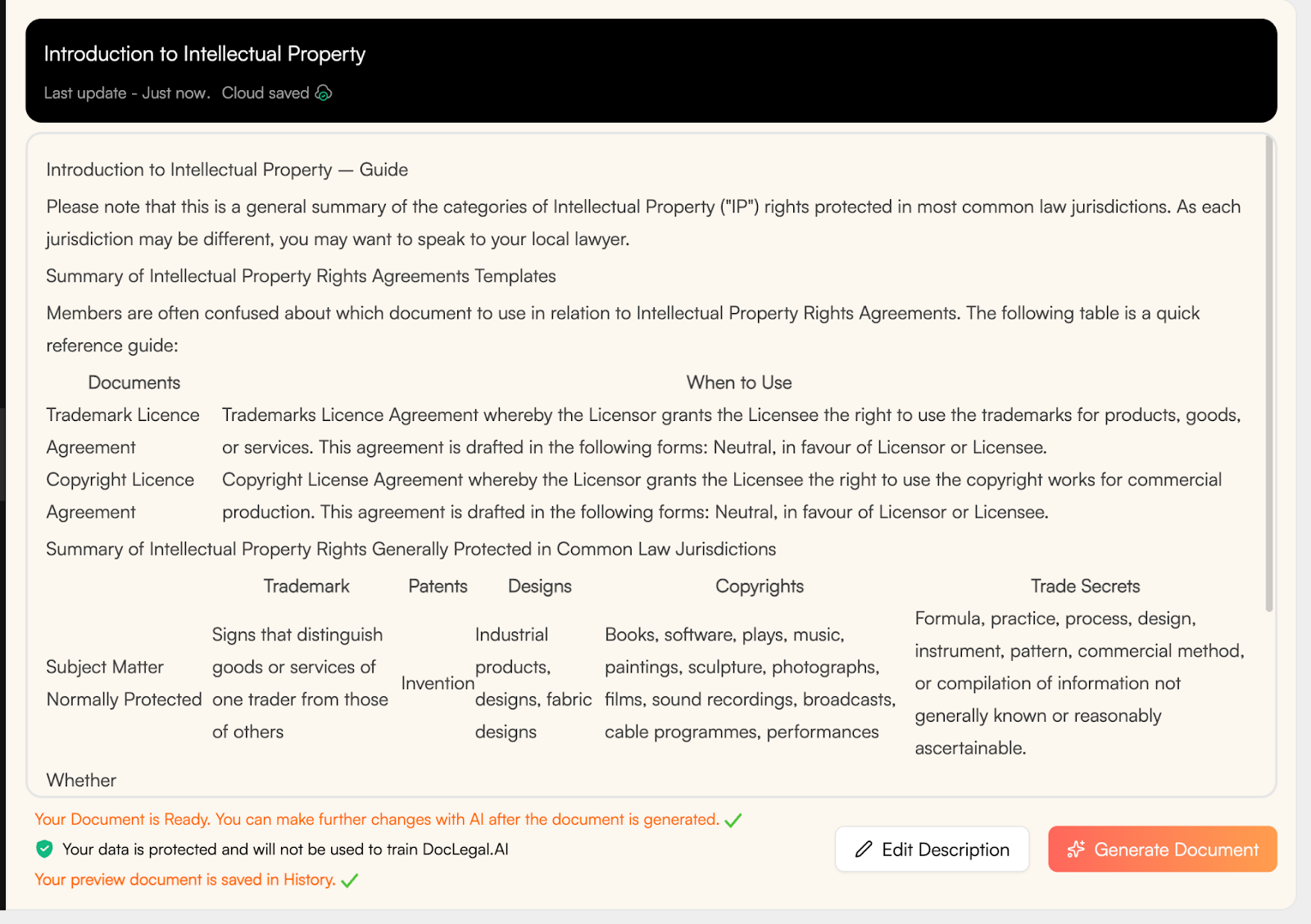
If you have any doubt, Doclegal.ai provides an introduction and a guide to IP, including free templates that you may use in your business. Click here to check it out.


.jpg)
.jpg)